Analyzing Timing Patterns of Bonus Thresholds in Mobile Poker Wagering Platforms
Écrit par Finley Flores · 22/11/2026
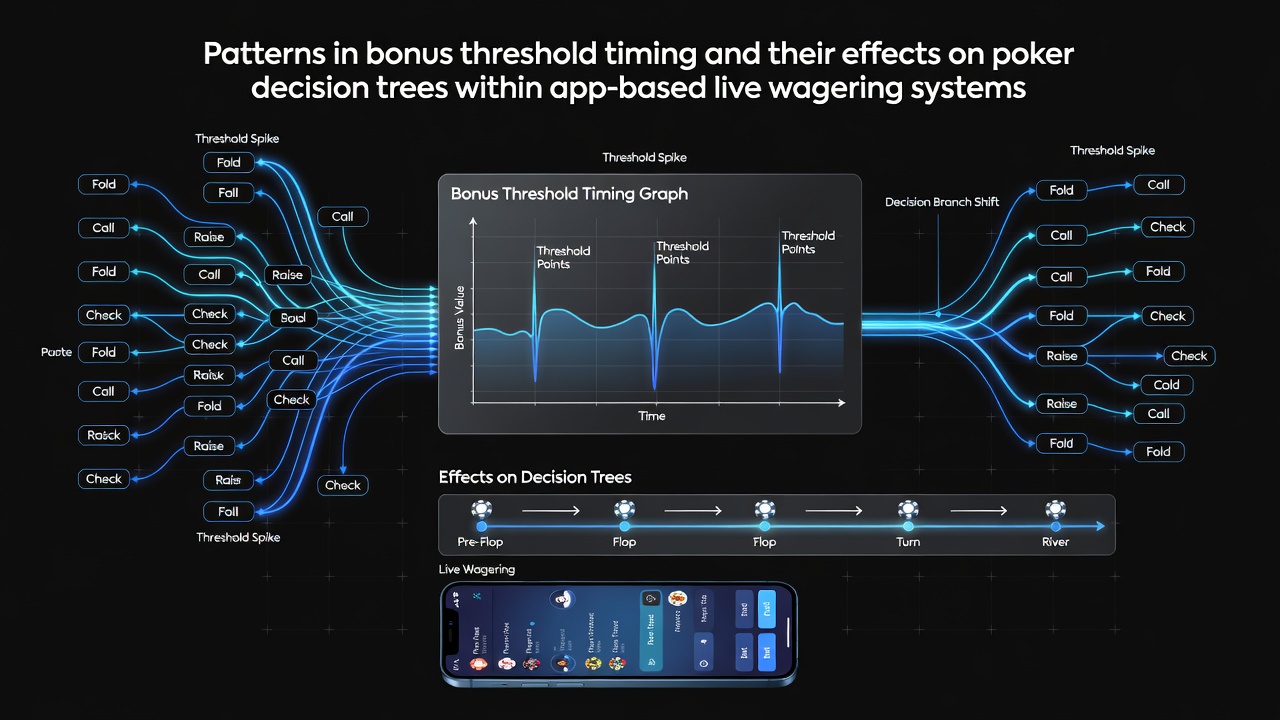
Analyzing Timing Patterns of Bonus Thresholds in Mobile Poker Wagering Platforms
App-based live wagering systems integrate bonus structures that activate once players reach specific thresholds tied to wagering volume or session duration. These mechanisms shape how participants evaluate options within poker decision trees, where choices such as calling, raising, or folding depend on calculated expected values adjusted for pending rewards.
Core Mechanics of Threshold Activation
Bonus thresholds in these platforms typically reset on daily or weekly cycles, and data compiled through 2026 shows that activation often aligns with peak evening hours across multiple time zones. When a threshold nears completion, the effective pot odds shift because the incoming bonus adds a fixed percentage to the player's bankroll upon unlock. Researchers tracking app telemetry note that this adjustment prompts earlier aggressive actions in marginal hands since the anticipated reward offsets potential losses from those decisions.
Platform algorithms monitor real-time progress toward each threshold and display countdown indicators that update every few seconds. Players therefore incorporate this visible timer into their mental models when constructing decision trees, treating the remaining requirement as an additional variable alongside stack sizes and position.
Observed Patterns Across User Cohorts
Analysis of aggregated session data reveals recurring clusters where bonus thresholds trigger during late-stage tournaments or cash-game streaks. In November 2026, several major platforms recorded spikes in threshold completions between 8 p.m. and midnight local time, coinciding with higher table traffic. Those patterns produce measurable changes in fold frequencies; participants reduce conservative folds by measurable margins once the bonus meter enters its final segment.
Studies from the Canadian Centre for Gaming Research indicate that users who reach thresholds mid-session tend to extend play duration by an average of 12 minutes compared with sessions lacking active bonuses. This extension alters downstream branches of decision trees because fatigue factors begin to interact with the reward incentive.
Impact on Strategic Branching
Decision trees in poker apps model each betting round as a series of nodes weighted by probability and payout. Bonus timing inserts an external multiplier at certain nodes, effectively increasing the value of paths that maintain or grow stack size until activation occurs. Observers tracking user behavior report that players assign higher utility to continuation bets when the threshold meter sits above 80 percent completion, because the potential bonus offsets the variance of those bets.
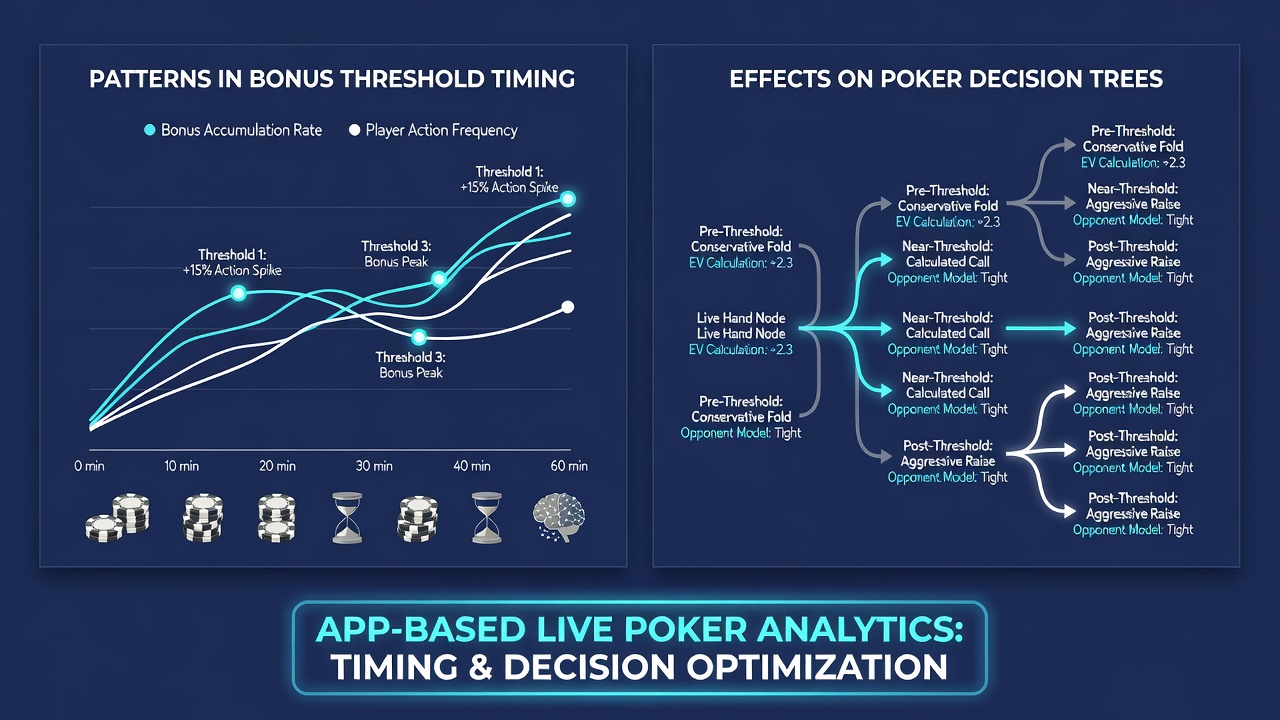
Conversely, once the bonus unlocks, the same players exhibit a reversion toward baseline strategies within the subsequent two hands. This reversion appears in telemetry as a temporary drop in raise frequency followed by stabilization. The pattern holds across both recreational and intermediate skill brackets according to anonymized logs shared by platform operators with academic partners.
Integration With Live Odds and Risk Parameters
Live wagering environments feed dynamic odds into the same interface that tracks bonus progress. When a threshold approaches, the combined display encourages participants to weigh immediate pot odds against the deferred value of the bonus. Industry reports from the Australian Gambling Research Centre document that this dual consideration leads to tighter opening ranges in early position once the meter crosses the halfway mark, because players seek to conserve chips for the post-threshold phase.
Yet the same data sets show expanded ranges in late position during the final 10 percent of threshold progress, where the bonus acts as a de facto insurance layer. These shifts propagate through the decision tree, changing the expected value calculations at every subsequent node until the reward is applied.
Regulatory and Platform Response Trends
Regulatory bodies in multiple jurisdictions require disclosure of threshold mechanics within app interfaces. In 2026, updates from the Malta Gaming Authority emphasized clearer labeling of reset timers to reduce unintended session extension. Platform teams respond by adjusting notification frequency so that alerts appear only at 25 percent intervals rather than continuously, thereby limiting constant recalibration of decision trees during active play.
Cross-device synchronization further complicates timing patterns because progress carries across phone and tablet sessions. When users switch devices mid-threshold, the decision tree must re-evaluate based on the updated remaining requirement, and telemetry indicates brief pauses in betting activity while the interface refreshes.
Conclusion
Patterns in bonus threshold timing continue to exert measurable influence on poker decision trees inside app-based live wagering systems. Data collected through November 2026 demonstrate consistent adjustments in betting frequencies and session lengths that align with threshold proximity. Platform operators and regulatory agencies track these interactions to maintain transparency, while researchers refine models that incorporate the external reward variable into standard game-theory calculations. The resulting frameworks help explain how a single timing parameter can cascade through multiple branches of strategic choice.