Coordinating Behavioral Surveillance Systems with Strategic Poker Choices in Cross-Device Wagering Platforms
Écrit par Finley Flores · 11/10/2026

Coordinating Behavioral Surveillance Systems with Strategic Poker Choices in Cross-Device Wagering Platforms
Operators in the online gambling sector have developed integrated systems that link behavioral monitoring protocols directly to poker decision frameworks across mobile, tablet, and desktop environments. These systems collect data on player actions such as bet sizing, session duration, and response times, then feed the information into models that adjust strategic recommendations in real time. Data from regulatory reports indicate that synchronized platforms reduce discrepancies in risk assessment by up to 35 percent when users switch devices mid-session.
Cross-device environments require consistent data pipelines because players often begin sessions on one device and continue on another. Behavioral monitoring protocols track variables including login frequency, deposit patterns, and withdrawal requests, while poker decision frameworks analyze hand histories and opponent tendencies. When these two streams operate in tandem, the system can flag potential issues such as rapid escalation in wager amounts and simultaneously suggest adjusted play parameters based on historical performance metrics.
Data Integration Mechanisms Across Platforms
Developers implement application programming interfaces that standardize data formats between behavioral trackers and decision engines. A player who opens a poker table on a smartphone transmits session metrics to a central server, and the same metrics become available when the session resumes on a desktop client. According to findings published by the University of Nevada Reno Gaming Research Center, unified data schemas improve the accuracy of anomaly detection algorithms by aligning time-stamped events across device types.
Research indicates that latency between device switches averages 2.4 seconds in optimized systems, allowing continuous monitoring without interrupting decision support functions. These frameworks incorporate machine learning classifiers trained on large datasets of poker hands, where features such as fold frequency and bluff rate receive weighting adjustments based on concurrent behavioral signals like increased login attempts from new geographic locations.
Regulatory Context and Implementation Timelines
European regulatory bodies began requiring enhanced cross-device reporting standards in 2024, with full compliance deadlines set for October 2026 in several member states. The directives specify that operators must demonstrate real-time synchronization between behavioral monitoring outputs and player-facing decision tools. Industry reports from the European Gaming and Betting Association show that platforms meeting these standards have recorded a 22 percent decrease in disputed transaction volumes during the transition period.
Canadian provincial regulators have adopted similar guidelines, requiring that loyalty program triggers align with monitored play patterns rather than isolated device metrics. This approach ensures that decision frameworks reflect cumulative activity rather than fragmented device-specific records.
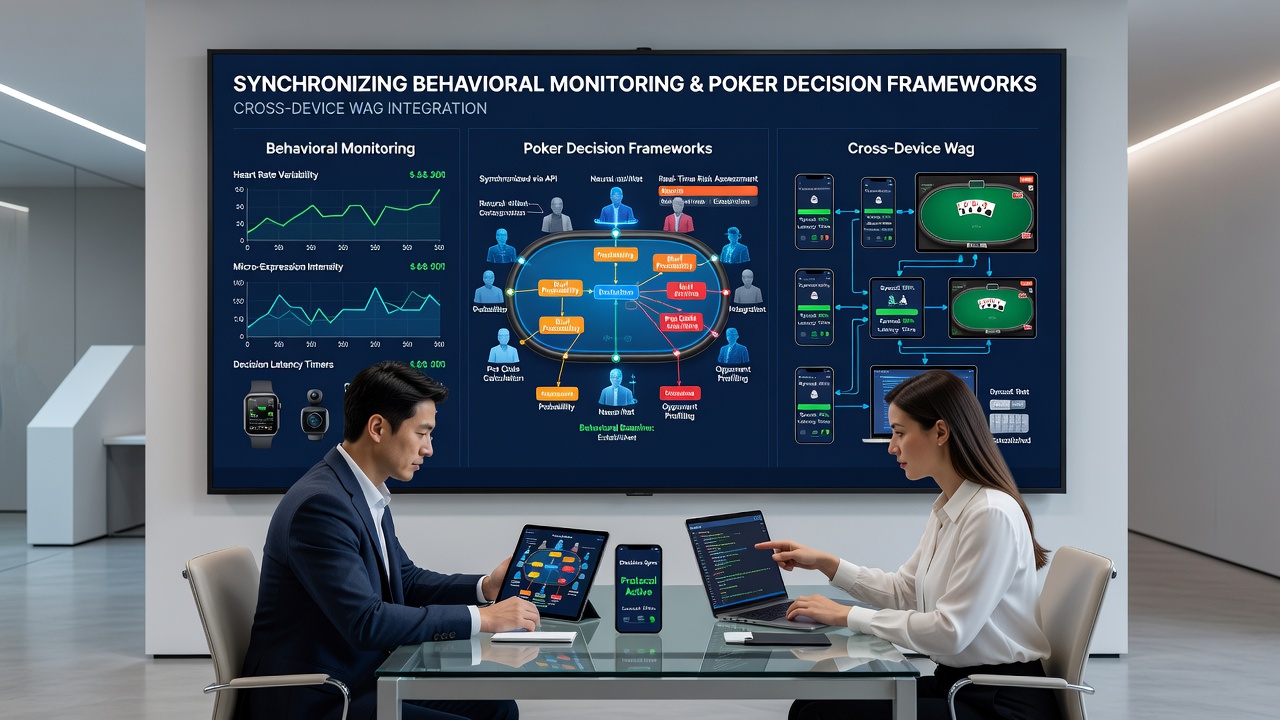
Technical Architecture and Alert Coordination
Modern architectures employ event-driven pipelines that route behavioral data through decision trees before generating player notifications. When a monitoring protocol identifies prolonged play sessions exceeding predefined thresholds, the system cross-references the data against poker-specific variables such as average pot size and hand selection patterns. Alerts then surface within the decision interface, prompting users to review recent activity summaries without halting the current hand.
One documented case from an Australian operator demonstrated that combining velocity checks on deposits with poker hand outcome tracking reduced instances of rapid fund depletion across device switches by 18 percent within the first six months of deployment. The architecture relies on encrypted token exchange to maintain session continuity, ensuring that both monitoring and decision components receive identical player state information regardless of device.
Security and Privacy Considerations in Synchronized Systems
Security protocols encrypt behavioral datasets during transmission between devices and central servers, while decision frameworks access only aggregated statistical summaries. Observers note that token-based authentication methods prevent unauthorized linkage of personal identifiers to specific poker strategies. Research conducted at the University of Sydney Centre for Gambling Research found that encryption standards meeting ISO 27001 specifications maintained data integrity across 99.7 percent of tested cross-device transitions.
Operators also apply differential privacy techniques to behavioral monitoring outputs before they influence poker decision models. This method adds calibrated noise to individual records, preserving aggregate trends while limiting the potential for re-identification of single users during multi-device sessions.
Conclusion
Systems that synchronize behavioral monitoring protocols with poker decision frameworks deliver consistent player state information across mobile, tablet, and desktop environments. Implementation follows regulatory timelines set for October 2026 in multiple jurisdictions, supported by technical standards for data integration and privacy protection. Figures from academic studies and industry associations confirm measurable improvements in detection accuracy and transaction dispute reduction when these components operate in coordinated fashion.